Showing posts with label Biography. Show all posts

Beyonce Biography.

Beyonce Knowles is one of the many impressive artists of the new millennium, but an individual in her own right. She's praised for her wildly inventive presentations in music and film, and respected for her down-to-earth persona. With her grace, beauty, charm, and gift for entertaining, Knowles has become a star and an American icon.
Born in Houston in the fall of 1981, Beyoncι Giselle Knowles started performing at age seven. From dance classes to singing in the church choir, Knowles was a natural. She and cousin Kelly Rowland met Latavia Roberson during this time, and the trio formed a group with Letoya Luckett. Mathew Knowles, Beyoncι's father and Rowland's legal guardian, signed on to be the girls' manager. This situation would ultimately lead to the formation of one of the greatest female R&B groups of all time -- Destiny's Child.
Destiny's Child made its debut 1990 and within ten years, the vocal act had experienced personal and political highs and lows that fueled the group's desire to make it big. Destiny's Child sold 33 million albums worldwide by 2002 and earned a slew of Grammys and additional music awards. "Jumpin' Jumpin'," "Bills, Bills, Bills," "Say My Name," and "Survivor" were smash hits, and the group appeared unstoppable.
In 2001, Knowles, Rowland, and Michelle Williams allowed themselves a break from the singing group and tried their hands at individual solo careers. Before landing several movie roles,
Knowles became the first African-American female artist and second woman ever to win the annual ASCAP Pop Songwriter of the Year Award. An appearance in the MTV drama Carmen: A Hip Hopera quickly followed, but it was her role as Foxxy Cleopatra in Austin Powers in Goldmember in 2002 that eventually moved Knowles from the stage to the screen. Her first single, "Work It Out," coincided with the release of the Mike Myers comedy and cemented Knowles' celebrity status. A guest spot on Jay-Z's "'03 Bonnie & Clyde" was equally popular when it appeared in October. In 2003, she shed her last name and rejoined Jay-Z for her proper debut single, the funkadelic "Crazy in Love," as the press and fans christened her a bona fide star. Beyoncι Knowles' debut album, Dangerously in Love, which appeared in June 2003, featured collaborations with Sean Paul, Missy Elliott, and OutKast's Big Boi. ~ MacKenzie Wilson, All Music Guide

Ashanti Biography.

With hitmaker Irv Gotti at the helm, Ashanti blasted into the urban music scene in 2002, topping the charts with multiple singles at once. She quickly became a sensation, gracing the covers of magazines and dominating urban radio. Ashanti built her reputation with duets, where she would complement an already popular rapper -- Ja Rule ("Always on Time"), Fat Joe ("What's Luv?"), the Notorious B.I.G. ("Unfoolish") -- contrasting the tough-guy male perspective with her own. It didn't take the young vocalist long to make a name for herself though: her debut album topped the Billboard album chart just as her debut solo single, "Foolish," was topping the Hot 100 chart. Her presence was inescapable.
Ashanti's overnight jump to superstardom followed that of Ja Rule, a similar urban music sensation helmed by Gotti. The New York producer took notice of Ashanti initially because of her beauty, dancing, and acting. She trained as a dancer at the Bernice Johnson Cultural Arts Center, learning a number of dance styles. She danced most notably in Disney's Polly, which starred Phylicia Rashad, and also appeared in a number of big-name music videos, in addition to other dance work. As an actress, she made a name for herself with roles in Spike Lee's Malcolm X and Who's da Man before that. The multi-talented vocalist was causing quite a stir, and Gotti did what he could to bring her into his Murder Inc. fold. After showcasing her swooning voice on Big Pun's "How We Roll" and the Fast and Furious soundtrack -- both in 2001 -- Gotti put Ashanti to work on her debut album, which he produced.
Success came quickly. A duet with Ja Rule, "Always on Time," hit number one on Billboard's Hot 100 chart in early 2002 just as a duet with Fat Joe, "What's Luv?," was creeping toward the same number one position. These two airplay-heavy singles, of course, set the stage perfectly for Ashanti's self-titled debut release. The album's lead single, "Foolish," raced up the Hot 100 chart, entering the Top Ten in March alongside "Always on Time" and "What's Luv?," giving her three Top Ten songs in the same week, including the number one and two positions -- a quite spectacular feat. And then Ashanti's album debuted at number one on the album chart, selling an astounding 500,000-plus copies in its first week. With all this chart-topping, Ashanti set some sales records and her success continued. Gotti readied a remix of "Foolish," titled "Unfoolish," that featured the Notorious B.I.G. and again overtook urban radio, where no artist was more omnipresent throughout 2002 than Ashanti.
She returned the following year with Chapter II, which likewise topped the Billboard album chart on the heels of its hot lead single, "Rock Wit U (Awww Baby)." The album's success was somewhat eclipsed, however, by all the negative drama surrounding the Murder Inc. camp at the time (i.e., the FBI investigation and the G-Unit feuding). A Christmas album followed late that year, and Concrete Rose appeared in December 2004. ~ Jason Birchmeier, All Music Guide

Ciara Biography.

Dubbed the "First Lady of Crunk & B" by the producer who should know, Lil Jon, singer Ciara burst onto the scene with the never-gonna-get-it single "Goodies," the breathy "answer song" to Petey Pablo's "Freek-a-Leek." She was born in Austin, TX, but with her father in the Army, Ciara spent time living in Germany, New York, California, Arizona, and Nevada before landing in Atlanta. In her early teens, she got a piece of paper out and wrote down her life's goal, to become a professional singer. She joined a girl group, worked on her songwriting, left the group, landed a publishing deal, and found a "music soul mate" when she met producer Jazze Pha. With Sean Garrett, the co-writer of Usher's massive hit "Yeah!," Ciara co-wrote "Goodies," and when Lil Jon heard the demo, he knew it was going to be big. LaFace released the Lil Jon-produced track in the summer of 2004, and its quick climb up the charts was remarkable. With help from Pha, Garrett, and Lil Jon, Ciara released her self-titled debut in September the same year. ~ David Jeffries, All Music Guide

Timbaland Biography

Timbaland & Magoo are a hip-hop duo from Norfolk, Virginia that stormed onto the scene in the fall of 1997 with their debut single "Up Jumps Da' Boogie" and album, Welcome to Our World. The duo met when they were teenagers in the early '90s. Over the next few years, they worked together intermitently as they concentrated on breaking into the music business. By the mid-'90s, Timbaland had established himself as a promising producer and in 1996 he began having hits. He produced Ginuwine's hit "Pony," as well SWV's "Can We" and Aaliyah's "One in a Million." Magoo had written a handful of cuts on the Ginuwine albums, as well as Missy "Misdemeanor" Elliot's debut, Supa Dupa Fly, which also featured several tracks produced by Timbaland. By 1997, the pair decided to launch a recording career together and in the fall of that year they released their debut album, Welcome to Our World. Its release was preceded by "Up Jumps Da' Boogie," a single featuring Missy Elliot and Aaliyah that became a Top 10 R&B hit. ~ Stephen Thomas Erlewine, All Music Guide

T.I Biography

Once dubbed "the Jay-Z of the South" by Pharrell Williams, T.I. gradually came into his own and established himself as one of rap's greatest and most successful MCs during the early 2000s. Like Jay-Z, T.I. -- born Clifford Harris in Atlanta, GA -- has always carried a balance of smoothness and toughness, and though 2001's I'm Serious (released on Arista) didn't shoot him out of the gate ΰ la Reasonable Doubt, he consistently grew and began a string of major hits with 2003's "24's." From that point through 2006, there wasn't any point when T.I. couldn't be heard within a couple hours on any given urban radio station throughout the U.S. 2003's Trap Muzik, 2004's Urban Legend, and 2006's King -- all released through the MC's deal with Atlantic -- were Top Ten albums, and King even spent some time at the very top of the chart. Released in tandem with his debut screen appearance in ATL, the album affirmed his status as a superstar. Far more ink has been spent on his legal issues and a conflict with fellow Southerner Lil' Flip than his Katrina relief efforts and other humanitarian involvements. On May 3, 2006, T.I.'s crew was caught up in a shooting after a show in Cincinnati that left three injured and Philant Johnson -- T.I.'s longtime friend and personal assistant -- dead. ~ Andy Kellman, All Music Guide

The Game Biography

Compton's own the Game (aka Jayceon Taylor) issued his debut LP The Documentary in 2004 through Aftermath/G Unit/Universal. With everyone from Dr. Dre and 50 Cent to Nate Dogg, Kanye West, and Just Blaze contributing to the album, The Documentary made it clear from the outset that geographic squabbles weren't a part of the Game's agenda. Rapping hadn't been at first, either. Having gotten involved in the drug trade after a rough childhood, it took being shot during a home invasion to cause an epiphany in Game. Inspired by N.W.A, The Chronic, Doggystyle, and classic albums from 2Pac, Notorious B.I.G., and Jay-Z, Game began rapping in 2001 and never looked back. His barbed and bold freestyles caught the ear of Dre, who signed him to Aftermath in 2003 and took the exec producer helm for his debut. It was delayed a few times, but The Documentary finally dropped in January 2005, buttressed by much buzzed-about singles like "Higher" and "Fresh '83." ~ Johnny Loftus, All Music Guide

Chamillionaire Biography

Dubbed "the Mixtape Messiah," Houston's Chamillionaire arrived late as a major-label artist during his city's 2005 takeover of mainstream rap -- the Top Ten Sound of Revenge, released during November that year, followed albums from Mike Jones, Slim Thug, and former Color Changin' Click partner Paul Wall -- but he had already built a loyal following outside the South and received significant print coverage. Through a prolific succession of mixtapes, Chamillionaire (born Hakeem Sediki) became known for his deep, versatile voice (he sings his own hooks very effectively) and lyrical ability. Originally part of Swishahouse, he switched to Paid in Full, where he and Paul Wall collaborated on 2002's Get Ya Mind Correct -- an album that sold 100,000 copies. Prior to inking his deal with Universal, he founded the Chamilitary label and began grooming the careers of brother Rasaq and 50/50 Twin. ~ Andy Kellman, All Music Guide

DMX Biography

Following the deaths of Tupac Shakur and the Notorious B.I.G., DMX took over as the reigning, undisputed king of hardcore rap. He was that rare commodity: a commercial powerhouse with artistic and street credibility to spare. His rapid ascent to stardom was actually almost a decade in the making, which gave him a chance to develop the theatrical image that made him one of rap's most distinctive personalities during his heyday. Everything about DMX was unremittingly intense, from his muscular, tattooed physique to his gruff, barking delivery, which made a perfect match for his trademark lyrical obsession with dogs. Plus, there was substance behind the style; much of his work was tied together by a fascination with the split between the sacred and the profane. He could move from spiritual anguish one minute to a narrative about the sins of the streets the next, yet keep it all part of the same complex character; sort of like a hip-hop Johnny Cash. The results were compelling enough to make DMX the first artist ever to have his first four albums enter the charts at number one.
DMX was born Earl Simmons in Baltimore, MD, on December 18, 1970. He moved with part of his family to the New York City suburb of Yonkers while still a young child. A troubled and abusive childhood turned him violent, and he spent a great deal of time living in group homes and surviving on the streets via robbery, which led to several run-ins with the law. He found his saving grace in hip-hop, starting out as a DJ and human beatbox, and later moved into rapping for a greater share of the spotlight, taking his name from the DMX digital drum machine (though it's also been reinterpreted to mean "Dark Man X"). He made a name for himself on the freestyle battle scene, and was written up in The Source magazine's Unsigned Hype column in 1991. Columbia subsidiary Ruffhouse signed him to a deal the following year, and released his debut single, "Born Loser." However, a surplus of talent on the Ruffhouse roster left DMX underpromoted, and the label agreed to release him from his contract. He issued one further single in 1994, "Make a Move," but was convicted of drug possession that same year, the biggest offense of several on his record.
DMX began to rebuild his career with an appearance on one of DJ Clue?'s underground mixtapes. In 1997, he earned a second major-label shot with Def Jam, and made a galvanizing guest appearance on LL Cool J's "4, 3, 2, 1." Further guest spots on Mase's "24 Hours to Live" and fellow Yonkers MCs the LOX's "Money, Power & Respect" created an even stronger buzz, and in early 1998, he released his debut Def Jam single, "Get at Me Dog." The song was a gold-selling smash on the rap and dance charts, and paved the way for DMX's full-length debut, It's Dark and Hell Is Hot, to debut at number one on the pop charts. Produced mostly by Swizz Beatz, who rode the album's success to a lucrative career of his own, It's Dark and Hell Is Hot earned DMX numerous comparisons to 2Pac for his booming, aggressive presence on the mic, and went on to sell over four million copies. Not long after the album's release in May 1998, DMX was accused of raping a stripper in the Bronx, but was later cleared by DNA evidence. He went to make his feature film debut co-starring in Hype Williams' ambitious but unsuccessful Belly.
Before the end of 1998, DMX completed his second album, and a pending buyout of Def Jam pushed the record into stores that December. Featuring a controversial cover photo of the rapper covered in blood, Flesh of My Flesh, Blood of My Blood entered the charts at number one and eventually went triple platinum. The following year, DMX hit the road with Jay-Z and the Method Man/Redman team on the blockbuster Hard Knock Life tour. During a tour stop in Denver, a warrant for his arrest was issued in connection with a stabbing, of which he was later cleared; another incident occurred in May, when he was accused of assaulting a Yonkers man who'd allegedly harassed his wife (the charges were once again dropped). More serious charges were brought that summer, when DMX's uncle/manager was accidentally shot in the foot at a New Jersey hotel. Police later raided DMX's home, and filed animal cruelty, weapons, and drug possession charges against the rapper and his wife; he eventually plea-bargained down to fines, probation, and community service. In the midst of those difficulties, the Ruff Ryders posse -- of which DMX was a core, founding member -- released a showcase compilation, Ryde or Die, Vol. 1. With contributions from DMX, as well as Eve, the LOX, and multiple guests, Ryde or Die, Vol. 1 debuted at number one in the spring of 1999, further cementing DMX's Midas touch.
Toward the end of 1999, DMX released his third album, ...And Then There Was X, which became his third straight to debut at number one. It also produced his biggest hit single since "Get at Me Dog" with "Party Up (Up in Here)," which became his first Top Ten hit on the R&B charts. The follow-ups "What You Want" and "What's My Name?" were also quite popular, and their success helped make ...And Then There Was X the rapper's best-selling album to date, moving over five million copies. During its run, DMX returned to the big screen with a major supporting role in the Jet Li action flick Romeo Must Die. In the meantime, he was indicted by a Westchester County, NY, grand jury on weapons and drug charges in June of 2000. He also entangled himself in a lengthy legal battle with police in Cheektowaga, NY (near Buffalo), when he was arrested in March for driving without a license and possession of marijuana. He missed one court date, and when he turned himself in that May, police discovered more marijuana in a pack of cigarettes the rapper had brought with him. He pleaded guilty and was sentenced to 15 days in jail, and his appeal to have the sentence reduced was finally denied in early 2001. After stalling for several weeks, he turned himself in and was charged with contempt of court. He was further charged with assault when, upon learning he would not be let out early for good behavior, allegedly threw a food tray at a group of prison officers. He later bargained the charges down to reckless assault and paid a fine, and accused guards of roughing him up and causing a minor leg injury.
Not long after DMX's release from jail, his latest movie, the Steven Seagal action film Exit Wounds, opened at number one in the box office. DMX also contributed the hit single "No Sunshine" to the soundtrack, and signed a multipicture deal with Warner Bros. in the wake of Exit Wounds' success. With his legal problems finally resolved, he returned to the studio and completed his fourth album, the more introspective The Great Depression. It was released in the fall of 2001 and became his fourth straight album to debut at number one. Although it went platinum quickly, it didn't have the same shelf life as his previous releases. In late 2002, DMX published his memoirs as E.A.R.L.: The Autobiography of DMX, and also recorded several tracks with Audioslave (i.e., the former Rage Against the Machine). One of their collaborations, "Here I Come," was featured on the soundtrack of DMX's next film, a reunion with Jet Li called Cradle 2 the Grave. The film opened at number one upon its release in March 2003, and its DMX-heavy soundtrack debuted in the Top Ten. ~ Steve Huey, All Music Guide

Nas Biography

Heralded instantly as one of New York's leading rap voices, Nas expressed an outspoken, self-empowered swagger that rallied the streets of his city and elsewhere. Whether proclaiming himself "Nasty Nas" or "Nas Escobar" or "Nastradamus" or "God's Son," the self-appointed King of New York battled numerous adversaries for his position atop the epicenter of East Coast rap, none more noteworthy than Jay-Z, who vied with Nas for the vacated throne left in the wake of the Notorious B.I.G.'s 1997 assassination. Such headline-worthy drama informed Nas' provocative rhymes, which he delivered with both a masterful flow and a wise perspective over breathtaking beats by amazing producers: legends like DJ Premier, Large Professor, and Pete Rock; hitmakers like Trackmasters, Timbaland, and Dr. Dre; street favorites like Swizz Beatz, Megahertz, and the Alchemist; and personal favorites of his own like L.E.S., Salaam Remi, and Chucky Thompson. Nas likewise collaborated with some of the industry's leading video directors like Hype Williams and Chris Robinson, presenting singles like "Hate Me Now," "One Mic," and "I Can" with dramatic flair. Throughout all the ups (the acclaim, popularity, and success) and all the downs (the pressure, adversaries, and over-reaching), Nas continually matured as an artist, evolving from a young street disciple to a vain all-knowing sage to a humbled godly teacher. Such growth made every album release an event and prolonged his increasingly storied career to epic proportions.
Born Nasir Jones, son of jazz musician Olu Dara, Nas dropped out of school in the eighth grade, trading classrooms for the streets of the rough Queensbridge projects, long fabled as the former stomping ground of Marley Marl and his Juice Crew as immortalized in "The Bridge." Despite dropping out of school, Nas developed a high degree of literacy that would later characterize his rhymes. At the same time, though, he delved into street culture and flirted with danger, such experiences similarly characterizing his rhymes. His synthesis of well-crafted rhetoric and street-glamorous imagery blossomed in 1991 when he connected with Main Source and laid down a fiery verse on "Live at the Barbeque" that earned him instant respect among the East Coast rap scene. Not long afterward, MC Serch of 3rd Bass approached Nas about contributing a track to the Zebrahead soundtrack. Serch was the soundtrack's executive producer and, like much of New York, had been impressed by "Live at the Barbeque." Nas submitted "Halftime," and the song so stunned Serch that he made it the soundtrack's leadoff track.
Columbia Records meanwhile signed Nas to a major-label contract, and many of New York's finest producers offered their support. DJ Premier, Large Professor, and Pete Rock entered the studio with the young rapper and began work on Illmatic. When Columbia finally released the album in April 1994, it faced high expectations; Illmatic regardless proved just as astounding as it had been billed. It sold very well, spawned multiple hits, and earned unanimous acclaim, followed soon after by classic status. The two years leading up to Nas' follow-up, It Was Written (1996), thus brought another wave of enormous anticipation. The ambitious rapper, who had begun working closely with industry heavyweight Steve Stoute, responded with a significantly different approach than he had taken with Illmatic: where that album had been a straightforward hip-hop album with few pop concessions, the largely Trackmaster-produced It Was Written made numerous concessions to the pop crossover market, most notably on the two hit singles, "Street Dreams" and "If I Ruled the World (Imagine That)." These singles -- both of which drew from well-known songs, Eurythmics' "Sweet Dreams (Are Made of This)" and Kurtis Blow's "If I Ruled the World," respectively -- broadened Nas' appeal greatly and awarded him the MTV-sanctioned crossover success he sought. This same crossover success, however, undermined some of his hip-hop credibility while his subsequent albums -- I Am and Nastradamus (both 1999) -- and their crossover tendencies did so to an even further extent.
Around this point in the late '90s, Nas nonetheless reigned atop the New York rap scene alongside few contemporaries in the wake of the Notorious B.I.G.'s assassination. In addition to his endless stream of hits by the industry's most successful producers -- "If I Ruled the World" (produced by the Trackmasters), "Hate Me Now" (Puff Daddy), "Nas Is Like" (DJ Premier), and "You Owe Me" (Timbaland), among others -- he popularly co-starred in the Hype Williams-directed film Belly (1998) alongside DMX and contributed to the soundtrack. Furthermore, he led a short-lived supergroup of New York rappers known as the Firm (also comprised of rappers Foxy Brown, AZ, and Nature, with producers Dr. Dre and the Trackmasters) and assembled a broad coalition of fellow Queensbridge rappers for the QB Finest compilation (2000). Amid all of this publicity, though, criticism began to mount. For every crossover fan Nas won with his dramatic MTV-aired videos, he lost support in the streets, where many initial supporters felt he had sold out and abandoned hip-hop ideals in favor of commercial success. Nas' sales reflected this fading support, as each subsequent album sold less than its predecessor despite the consistent hitmaking.
A series of incidents in 2001 provided a key turning point for Nas' declining career. The rapper's personal life became increasingly conflicted, as his mother began suffering from cancer and his woman betrayed him. To make matters worse, longtime rival Jay-Z pointedly dissed Nas on "Takeover," the much-discussed leadoff song from his universally acclaimed Blueprint album (2001). Jay-Z called out Nas for not having put out a "hot" album since Illmatic, among other reasons, and also made demeaning comments about Nas' woman. And it didn't help that Jay-Z had indeed rose atop the New York rap scene, giving him ample justification to call out Nas, who had fallen from favor and receded from the public eye while he dealt with his personal issues. Following a much-circulated underground freestyle over the beat to "Paid in Full," Nas responded strikingly in December 2001 with Stillmatic, the title a reference to his one undeniable masterpiece, Illmatic, which had been released nearly a decade earlier. Most notably, Stillmatic opened with the song "Ether," a very direct response (featuring the chants "f*ck Jay-Z" and "I will not lose"), followed by perhaps Nas' most aggressive single ever, "Get Ur Self A...." These two songs in particular rallied the streets while the moving video for "One Mic" received heavy support from MTV. Throughout 2002, Nas continued his comeback with a number of guest appearances, among them Brandy's "What About Us?," J-Lo's "I'm Gonna Be Alright," and Ja Rule's "The Pledge," as well as yet more headline-worthy controversy, this time involving his no-show at popular radio station Hot 97's annual Summer Jam.
Amid all of the drama, Nas managed to salvage his esteemed reputation and reclaim his lofty status atop the New York scene. Stillmatic earned immediate wide acclaim from fans and critics alike and sold impressively, while Columbia furthered the comeback fervor with two archival releases, one of remixes (From Illmatic to Stillmatic [2002]), the other of outtakes (The Lost Tapes [2002]). Then at the end of the year Columbia released a new studio album, God's Son, and Nas once again basked in widespread acclaim as the album sold well, spawned sizable hits ("Thugz Mansion," "Made You Look," "I Can"), and received rampant media support. Two years later Nas returned with Street's Disciple (2004), a sprawling double album that delved deeply into various issues, most notably politics and his impending marriage to Kelis. The two-sided "Thief's Theme"/"You Know My Style" single dropped in summer 2004, several months before the album's release, and was followed that fall by the proper lead single, "Bridging the Gap." The album sort of came and went, however, without the sort of commercial success that had become customary. More troubling, new kid on the block 50 Cent took a swipe at Nas later that year on "Piggy Bank," further bringing the veteran rapper's present status into question. ~ Jason Birchmeier, All Music Guide

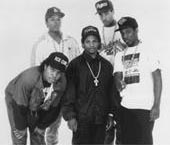
N.W.A Biography

N.W.A., the unapologetically violent and sexist pioneers of gangsta rap, is in many ways the most notorious group in the history of rap. Emerging in the late '80s, when Public Enemy had rewritten the rules of hardcore rap by proving that it could be intelligent, revolutionary and socially aware, N.W.A. capitalized on PE's sonic breakthroughs while ignoring their message. Instead, the five-piece crew celebrated the violence and hedonism of the criminal life, capturing it all in blunt, harsh language. Initially, the group's relentless attack appeared to be serious, vital commentary, and it even provoked the FBI to caution N.W.A.'s record company, but following Ice Cube's departure late 1989, the group began to turn to self-parody. With his high-pitched whine, Eazy-E's urban nightmares now seemed like comic book fantasies, but that fulfilled the fantasies of the teenage, White suburbanites that had become their core audience, and the group became more popular than ever. Nevertheless, clashing egos prevented the band from recording a third album, and they fell apart once producer Dr. Dre left for a solo career in 1992. Although the group was no longer active, their influence -- from their funky, bass-driven beats to their exaggerated lyrics -- was evident throughout the '90s.Ironically, in its original incarnation NWA was hardly revolutionary. Eazy-E (b. Eric Wright), a former drug dealer who started Ruthless Records with money he earned by pushing, was attempting to start a rap empire, by building a roster of successful rap artists. However, he wasn't having much success until Dr. Dre -- a member of the World Class Wreckin' Cru -- and Ice Cube (b. O'Shea Jackson) began writing songs for Ruthless. Eazy tried to give one of the duo's songs, "Boyz N The Hood," to Ruthless signees HBO and when the group refused, Eazy formed NWA -- an acronym for Niggaz With Attitude -- with Dre and Cube, adding World Class Wreckin' Cru member DJ Yella (b. Antoine Carraby), the Arabian Prince and the D.O.C. to the group. N.W.A.'s first album, N.W.A. and the Posse, was a party-oriented jam record that largely went ignored upon its 1987 release. In the following year, the group added MC Ren and revamped their sound, bringing in many of the noisy, extreme sonic innovations of Public Enemy and adopting a self-consciously violent and dangerous lyrical stance. Late in 1988, N.W.A. delivered Straight Outta Compton, a vicious hardcore record that became an underground hit with virtually no support from radio, the press or MTV. N.W.A. became notorious for their hardcore lyrics, especially those of "Fuck Tha Police," which resulted in the FBI sending a warning letter to Ruthless and its parent company Priority, suggesting that the group should watch their step. Most of the group's political threat left with Ice Cube when he departed in late 1989 amidst many financial disagreements. A nasty feud between N.W.A. and Cube began that would culminate with Cube's "No Vaseline," an attack on the group's management released on his 1991 Death Certificate album. By the time the song was released, N.W.A., for all intents and purposes, was finished. In the two years between Ice Cube's departure and the group's dissolution, N.W.A. was dominated by Eazy-E's near-parodic lyrics and Dr. Dre's increasingly subtle and complex productions. The group quickly released an EP, 100 Miles and Runnin', in 1990 before following it up early the next year with Efil4zaggin ("Niggaz 4 Life" spelled backward). Efil4zaggin was teeming with dense, funky soundscapes and ridiculously violent and misogynist lyrics. Naturally, the lyrics provoked outrage from many critics and conservative watchdogs, but that only increased the group's predominately male, White suburban audience. Even though the group was at the peak of their popularity, Dre began to make efforts to leave the crew, due to conflicting egos and what he perceived as an unfair record deal. Dre left the group to form Death Row Records with Suge Knight in early 1992. According to legend, Knight threatened to kill NWA's manager Jerry Hibbler if he refused to let Dre out of his contract. Over the next few years, Dre and Eazy engaged in a highly-publicized feud, which included both of the rappers attacking each other on their respective solo albums. MC Ren and Yella both released solo albums, which were largely ignored, and Eazy-E continued to record albums that turned him into a complete self-parody until his tragic death from AIDS in March 1995. Before he died, Dre and Cube both made amends with Eazy. With his first solo album, 1992's The Chronic, Dr. Dre established himself as the premier hip-hop producer of the mid-'90s, setting the pace for much of hardcore rap with its elastic bass and deep, rolling grooves. Gangsta rap established itself as the most popular form of hip-hop during the '90s -- in other words, N.W.A.'s amoralistic, hedonistic stance temporarily triumphed over the socially conscious, self-award hip-hop of Public Enemy, and it completely rewrote the rules of hip-hop for the '90s.

Mary J Blidge Biography

When her debut album, What's the 411?, hit the street in 1992, critics and fans alike were floored by its powerful combination of modern R&B with an edgy rap sound that glanced off of the pain and grit of Mary J. Blige's Yonkers, NY, childhood. Called alternately the new Chaka Khan or new Aretha Franklin, Blige had little in common stylistically with either of those artists, but like them helped adorn soul music with new textures and flavors that inspired a whole generation of musicians. With her blonde hair, self-preserving slouch, and combat boots, Blige was street-tough and beautiful all at once, and the record company execs who profited off of her early releases did little to dispel the bad-girl image that she earned as she stumbled through the dizzying first days of her career.
As she exorcised her personal demons and softened her style to include sleek designer clothes, she remained a hero to thousands of girls growing up in the same kinds of rough places she came from. Blige reinvented her career again and again by shedding the bad habits and bad influences that kept her down; by the time her fourth album, Mary, was released in 1999, she had matured into an expressive singer able to put the full power of her voice behind her music, while still reflecting a strong urban style. With her fifth album, No More Drama, it wasn't just Blige's style that shone through the structures set up for her by songwriters and producers, it was her own vision -- spiritual, emotional, personal, and full of wisdom, and reflected an artist who was comfortable with who she was and how far she had come.
Born in the Bronx on January 11, 1971, Blige spent the first few years of her life in Savannah, GA, before moving with her mother and older sister to the Schlobam housing projects in Yonkers, NY. Her rough life there produced more than a few scars, physical and otherwise, and Blige dropped out of high school her junior year, instead spending time doing her friends' hair in her mother's apartment and hanging out. When she was at a local mall in White Plains, NY, she recorded herself singing Anita Baker's "Caught Up in the Rapture," into a karaoke machine. The resulting tape was passed by Blige's stepfather to Uptown Records' CEO, Andre Harrell. Harrell was impressed with Blige's voice and signed her to sing backup for local acts like Father MC. In 1991, however, Sean "Puffy" Combs took Blige under his wing and began working with her on What's the 411?, her debut album. Combs had a heavy hand in What's the 411?, along with producers Dave Hall, Mark Morales, and Mark Rooney, and the stylish touches that they added to Blige's unique vocal style created a stunning album that bridged the gap between R&B and rap in a way that no female singer had before. Uptown tried to capitalize on the success of What's the 411? by issuing a remixed version of it a year later, but it was only a modest success creatively and commercially.
Her 1995 follow-up, My Life, again featured Combs' handiwork, and if it stepped back stylistically from its urban roots by featuring less of a rap sound, it made up for it with its subject matter. My Life was full of ghetto pathos and Blige's own personal pain shone through like a beacon. Her rocky relationship with fellow Uptown artist K-Ci Hailey likely contributed to the raw emotions on the album. The period following the recording of My Life was also a difficult time professionally for Blige, as she severed her ties with Combs and Uptown, hired Suge Knight as a financial advisor, and signed with MCA.
Released in 1997, Share My World marked the beginning of Blige's creative partnerships with Jimmy Jam and Terry Lewis. The album was another hit for Blige and debuted at number one on the Billboard charts. Critics soured somewhat on its more conventional soul sound, but Blige's fans seemed undaunted. By the time her next studio album, Mary, came out in 1999, the fullness and elegance of her new sound seemed more developed, as Blige exuded a classic soul style aided by material from Elton John and Bernie Taupin, Stevie Wonder, and Lauryn Hill. Mary made it obvious that the ghetto fabulous style and more confrontational aspects of her music were gone, while the emotive power still remained.
That power also helped carry the more modern-sounding 2001 release, No More Drama, a deeply personal album that remained a collective effort musically yet reflected more of Blige's songwriting than any of her previous efforts. The Mary J. Blige on No More Drama seemed miles away from the flashy kid on What's the 411?, yet it was still possible to see the path through her music that produced an older, wiser, but still expressive artist. In 2003 she was reunited with P. Diddy, who produced the majority of that year's Love and Life album. The Breakthrough followed two years later. ~ Stacia Proefrock, All Music Guide

Missy Elliott Biography

No female rap artist paralleled the success of Missy Elliott, neither during her reign nor before, and none was more deserving. Unlike most of urban music's female superstars, Missy writes her own songs as well as performs them, and her creative wit in on a par with her stylish demeanor. In addition to her talent and showmanship, though, she established herself as a genuine hitmaker alongside her longtime producer, Timbaland. She initially scored hits for others, namely Aaliyah ("One in a Million," "If Your Girl Only Knew") and to a lesser extent 702 ("Steelo"), before moving on to score a dazzling run for herself. Her debut album, Supa Dupa Fly (1997), spawned a number of hits such as "The Rain" that were more trend-setting than they were chart-topping. The chart-toppers, of course, came soon after: "She's a Bitch" and "Hot Boyz" (1999); "Get Ur Freak On" and "One Minute Man" (2001); and "Work It" and "Gossip Folks" (2002). In each of these, Missy proved that, with both dignity and joviality, women could be sexual as well as forceful. As a result, she defied every stereotype imaginable without forsaking her broad fan base.
Born in Portsmouth, VA, in 1971 as Melissa Elliott, Missy's professional music career began when Jodeci member/producer Devante Swing signed her and her group, Sista, to his Swing Mob record label. Unfortunately, Swing Mob Records fell through and along with it the plans for Sista's debut album. Determined to move forward, Missy turned to longtime acquaintance Timbaland, who happened to be producing some tracks for Aaliyah's One in a Million (1996) album. It proved to be a key move for Missy, as the album racked up enormous sales. Soon record execs were knocking on her door. Missy began working with a number of artists as either a songwriter or a vocalist/rapper before finally signing herself a deal with Elektra in 1996. A year later, Supa Dupa Fly hit the streets and soon after went platinum thanks to "The Rain." Besides the sales numbers, the album also proved critically successful, impressing nearly everyone who heard it. It had not only radio-ready singles ("Sock It 2 Me," "Beep Me 911," "Hit 'Em Wit da Hee") but also an astounding array of album tracks that showcases just how multi-talented Missy indeed was, singing on some, rapping on others.
In 1999, she returned with her much-awaited follow-up album, Da Real World, an even more ambitious album that featured two mammoth hits -- "She's a Bitch" and "Hot Boyz" -- along with an array of often daring collaborations with such unlikely candidates as Eminem. Around this same time, she began appearing in TV ads for the Gap and Sprite, proving that not only was she a musical talent but also an important icon for the era. The cycle repeated itself in 2001 when she released Miss E...So Addictive, again powered by two huge hits: "Get Ur Freak On" and "One Minute Man." Her remarkable popularity continued a year later with her next album, Under Construction, and its hit singles, "Work It" and "Gossip Folks." Missy's music machine continued pummeling the charts, with Timbaland & Magoo's follow-up Under Construction, Pt. II appearing in mid-November and the new Elliott LP This Is Not a Test! released a week later. Ciara, Slick Rick, Mary J. Blige, and American Idol winner Fantasia were some of the guests on Missy's 2005 album The Cookbook. ~ Jason Birchmeier, All Music Guide

Chingy Biography

Reminiscent of Nelly and repped by Ludacris -- the Dirty South's two biggest stars in the early 2000s -- Chingy had all the makings of a rap sensation and indeed lived up to his promise immediately, when his debut single, "Right Thurr," became an overnight summer anthem in 2003. Like Nelly and his St. Lunatics posse, Chingy is a St. Louis native, debuted at a young age, and boasts a Southerrn dialect. All of this made him considerably marketable in the wake of Nelly's massive success the summer before. Ludacris and his manager, Chaka Zulu, noted this and were quick to sign Chingy to their fledging Disturbing the Peace label and rush released his debut single, "Right Thurr." The party rap track blew up in the clubs first, especially throughout the South, and quickly infiltrated urban radio in the midst of summer while simultaneously climbing to the upper reaches of the Billboard Hot 100 chart (peaking at number four) and getting rotated heavily on MTV, where it was billed as "buzzworthy." "Holidae In" and "One Call Away," two other singles spun off the Jackpot album, fared almost as well. By the end of the following year, the follow-up -- Powerballin' -- was in stores. ~ Jason Birchmeier, All Music Guide

LL Cool J Biography

Hip-hop is notorious for short-lived careers, but LL Cool J is the inevitable exception that proves the rule. Releasing his first hit, "I Can't Live Without My Radio," in 1985 when he was just 17 years old, LL initially was a hard-hitting, street-wise b-boy with spare beats and ballistic rhymes. He quickly developed an alternate style, a romantic -- and occasionally sappy -- lover's rap epitomized by his mainstream breakthrough single, "I Need Love." LL's first two albums, Radio and Bigger and Deffer, made him a star, but he strived for pop stardom a little too much on 1989's Walking With a Panther. By 1990, his audience had declined somewhat, since his ballads and party raps were the opposite of the chaotic, edgy political hip-hop of Public Enemy or the gangsta rap of N.W.A., but he shot back to the top of the charts with Mama Said Knock You Out, which established him as one of hip-hop's genuine superstars. By the mid-'90s, he had starred in his own television sitcom, In the House, appeared in several films, and had racked up two of his biggest singles with "Hey Lover" and "Doin' It." In short, he had proven that rappers could have long-term careers.
Of course, that didn't seem likely when he came storming out of Queens, NY, when he was 16 years old. LL Cool J (born James Todd Smith; his stage name is an acronym for "Ladies Love Cool James") had already been rapping since the age of nine. Two years later, his grandfather -- he had been living with his grandparents since his parents divorced when he was four -- gave him a DJ system and he began making tapes at home. Eventually, he sent these demo tapes to record companies, attracting the interest of Def Jam, a fledgling label run by New York University students Russell Simmons and Rick Rubin. Def Jam signed LL and released his debut, "I Need a Beat," as their first single in 1984. The record sold over 100,000 copies, establishing both the label and the rapper.
LL dropped out of high school and recorded his debut album, Radio. Released in 1985, Radio was a major hit and it earned considerable praise for how it shaped raps into recognizable pop-song structures. On the strength of "I Can't Live Without My Radio" and "Rock the Bells," the album went platinum in 1986. The following year, his second album, Bigger and Deffer, shot to number three due to the ballad "I Need Love," which became one of the first pop-rap crossover hits.
LL's knack for making hip-hop as accessible as pop was one of his greatest talents, yet it was also a weakness, since it opened him up to accusations of him being a sellout. Taken from the Less Than Zero soundtrack, 1988's "Goin' Back to Cali" walked the line with ease, but 1989's Walking With a Panther was not greeted warmly by most hip-hop fans. Although it was a Top Ten hit and spawned the gold single "I'm That Type of Guy," the album was perceived as a pop sell-out effort, and on a supporting concert at the Apollo, he was booed. LL didn't take the criticism lying down -- he struck back with 1990's Mama Said Knock You Out, the hardest record he ever made. LL supported the album with a legendary, live acoustic performance on MTV Unplugged, and on the strength of the Top Ten R&B singles "The Boomin' System" and "Around the Way Girl" (number nine, pop) as well as the hit title track, Mama Said Knock You Out became his biggest-selling album, establishing him as a pop star in addition to a rap superstar. He soon landed roles in the films The Hard Way (1991) and Toys (1992), and he also performed at Bill Clinton's presidential inauguration in 1993. Mama Said Knock You Out kept him so busy that he didn't deliver the follow-up, 14 Shots to the Dome, until the spring of 1993. Boasting a harder, gangsta-rap edge, 14 Shots initially sold well, debuting in the Top Ten, but it was an unfocused effort that generated no significant hit singles. Consequently, it stalled at gold status and hurt his reputation considerably.
Following the failure of 14 Shots to the Dome, LL began starring in the NBC sitcom In the House. He returned to recording in 1995, releasing Mr. Smith toward the end of the year. Unexpectedly, Mr. Smith became a huge hit, going double platinum and launching two of his biggest hits with the Boyz II Men duet "Hey Lover" and "Doin' It." At the end of 1996, he released the greatest-hits album, All World, while Phenomenon appeared one year later. G.O.A.T. Featuring James T. Smith: The Greatest of All Time, released in 2000, reached the top of the album charts, and 2002's 10 featured one of his biggest hits in years, "Luv U Better." With the help of producer Timbaland he unleashed the tough DEFinition album in 2004 as his James Todd Smith clothing line was hitting the malls. "Control Myself," a hit single featuring Jennifer Lopez, prefaced 2006's Todd Smith album. ~ Stephen Thomas Erlewine, All Music Guide

Kanye West Biography

One of the few truly unique hip-hop artists to revel atop the commercial side of the industry during the early 2000s, Kanye West initially spent most of his time producing flavorful hits for Jay-Z and other top-tier rappers, yet he eventually seized the opportunity to launch his own rapping career as well, with much acclaim awaiting him. Granted, West himself wasn't a phenomenal rapper, but he had a lot going for him. For one, he was witty, coming up with off-the-wall lyrics that were smart and funny at the same time, even if they didn't employ elaborate rhyming schemes à la Rakim or street-prophet motifs à la Nas. Secondly, he had a singsong flow that made him seem like an everyman rapper as if he were your homeboy from down the street (or perhaps you yourself), even though he was, in fact, a seasoned rapper who'd been spitting game since he first heard Run-D.M.C. way back in the day.
Moreover, his beat-making skills were peerless: a trademark pitched-up, chopped-up use of somewhat recognizable samples for his hooks, and a likewise trademark stutter-step drum-programming touch for his rhythms -- a simple yet potent combination. And lastly, because of his hitmaking credentials, he had ties to some of the top names in the industry, from Jay-Z and Ludacris to Dame Dash and Jamie Foxx, all of whom helped West get his solo career off the ground with a bang. That bang happened during the opening weeks of 2004, when not one but two songs featuring him as a rapper ("Through the Wire" and "Slow Jamz") were downright ubiquitous, saturating music video television and urban radio all the while skyrocketing to the top of the charts. Of course, West was no stranger to success, having produced hits for years, but suddenly he wasn't just an in-demand producer -- he was the man of the moment, the latest in a long line of momentarily brand-new, red-hot rappers thrust into the mass-media spotlight.
From out of left field (i.e., Chicago, anything but a hip-hop hotbed), West was an unlikely sensation and more than once defied adversity. Like so many others who were initially inspired by Run-D.M.C., he began as just another aspiring rapper with a boundless passion for hip-hop, albeit a rapper with a Midas touch when it came to beatmaking. And it was indeed his beatmaking skills that got his foot in the industry door. Though he did quite a bit of noteworthy production work during the late '90s, it was his work for Roc-a-Fella at the dawn of the new millennium that took his career to the next level. Alongside fellow fresh talent Just Blaze, West became one of The Roc's go-to producers, consistently delivering hot tracks to album after album. He first caught everyone's ear in 2001 when he laced Jay-Z's earth-shaking Blueprint album with "Takeover" and "Izzo (H.O.V.A.)." Both songs were enormous successes, partly so because of West's trademark beatmaking style, which was largely sample-based -- in these brilliant cases the former track appropriating snippets of the Doors' "Five to One," the latter the Jackson 5's "I Want You Back."
More high-profile productions followed, and before long word spread that West was going to release an album of his own, on which he'd rap as well as produce. Unfortunately, that album was a long time coming, pushed back and then pushed back again. It didn't help, of course, that West experienced a tragic car accident in October 2002 that almost cost him his life. He capitalized on the traumatic experience by using it as the inspiration for "Through the Wire" (and its corresponding video), which would later become the lead single for his eventually released debut album. That debut album, The College Dropout (2004), was continually delayed while West continued to churn out big hits for the likes of Talib Kweli ("Get By"), Ludacris ("Stand Up"), Jay-Z ("'03 Bonnie & Clyde"), and Alicia Keys ("You Don't Know My Name"). Then, just as "Through the Wire" was breaking big-time at the tail end of 2003, another West song caught fire, a collaboration with Twista and comedian/actor Jamie Foxx called "Slow Jamz" that gave the rapper/producer two simultaneously ubiquitous singles and a much-anticipated debut album. As with so many of West's songs, these two were driven by somewhat recognizable sample-based hooks -- Chaka Khan's "Through the Fire" in the case of "Through the Wire," and Luther Vandross' "A House Is Not a Home" in the case of "Slow Jamz."
In the wake of his breakout success, West earned a whopping ten nominations for the 47th annual Grammy Awards, held in early 2005. The College Dropout won the Best Rap Album award, "Jesus Walks" won Best Rap Song, and a songwriting credit on "You Don't Know My Name" had West sharing the Best R&B Song award with Alicia Keys and Harold Lilly. Later in the year, he released his second solo album, Late Registration, which met with enormous success, hit the top of the charts, and won the Grammy for Album of the Year in early 2006. That same year, the live album Late Orchestration: Live at Abbey Road Studios found West performing his hits with a 17-piece string orchestra. The album and accompanying DVD were only released in Europe. ~ Jason Birchmeier, All Music Guide

Ludacris Biography

Ludacris rode the early-2000s Dirty South explosion to widespread popularity, as his songs enjoyed an enormous embrace, mainly by urban media outlets but also MTV and pop radio. The Atlanta-based rapper went from local sensation to household name after Def Jam signed him to its Def Jam South subsidiary in 2000. In addition to connecting him with super-producers like Timbaland, the Neptunes, and Organized Noize, Def Jam gave Ludacris remarkable marketing push. Ludacris thus quickly became one of the rap industry's most in-demand rappers, guesting on hits for everyone from Missy Elliott ("One Minute Man") to Jermaine Dupri ("Welcome to Atlanta") when he wasn't dominating the urban market with his own hits, most notably "What's Your Fantasy?," "Southern Hospitality," "Area Codes," and "Rollout (My Business)."
Before he became the Dirty South's most successful rapper, Ludacris DJed at an Atlanta radio station. He used the opportunity to hone his craft on the mic, learn about the industry, and make a name for himself throughout the Atlanta area, which had become the South's rap mecca starting in the mid-'90s. Eventually, he began aspiring toward a career as a rapper rather than as a radio jock, and after working with Timbaland -- appearing on the super-producer's Tim's Bio album (the original version of "Fat Rabbit") in 1998 -- Ludacris began taking his rap career seriously. He recorded an album, Incognegro (2000), and released it on his independently released Disturbing tha Peace label. Ludacris primarily worked with producer Shondrae for the album, though also with Organized Noize to a lesser extent. Incognegro sold impressively in Atlanta, where Ludacris was well known for his radio work.
Soon after Incognegro became the talk of Atlanta and "What's Your Fantasy?" became a regional hit, Scarface came knocking. Def Jam had given the veteran rapper the go-ahead to scout for talent in the South, since the Dirty South movement was gaining steam at the time and Def Jam wanted to start a Def Jam South subsidiary. Ludacris became Scarface's first signing, and Def Jam re-packaged the tracks from Incognegro, along with a few new productions: a U.G.K. collaboration ("Stick 'Em Up"), a Neptunes production ("Southern Hospitality"), and a remix of his previously released song with Timbaland (retitled "Phat Rabbit"). Def Jam then gave the resulting album, Back for the First Time (2000), substantial marketing push, choosing "What's Your Fantasy?" (an explicit duet about sexual fantasies from both the male and female perspective) as the first single. Though some radio stations were hesitant to air such a provocative song, "What's Your Fantasy?" became an enormous success -- as did, to a lesser extent, its even more provocative remix featuring Foxy Brown and Trina -- opening the door for countless other truly "dirty" Dirty South songs that would soon become the norm rather than the exception.
Following his initial breakthrough with "What's Your Fantasy?," Ludacris remained ubiquitous. He toured the States with OutKast and released a flurry of successive hit singles: the Neptunes-produced "Southern Hospitality," the Timbaland-produced "Phat Rabbit," the Nate Dogg collabo "Area Codes," the Timbaland-produced "Rollout (My Business)," the Organized Noize-produced "Saturday (Oooh Oooh!)," the KLC-produced "Move Bitch." His second album for Def Jam, Word of Mouf (2001), peaked at number three on the Billboard album chart in October and hovered at the top of the charts for a long time. Furthermore, he contributed to hits for other artists during this same time, most notably Missy Elliott's "One Minute Man" and Jermaine Dupri's "Welcome to Atlanta," and also released another album, Golden Grain (2002), which featured his Disturbing tha Peace posse. The proper Ludacris follow-up, Chicken -N- Beer, was released in October 2003, and he returned a year later with Red Light District. ~ Jason Birchmeier, All Music Guide

Xzibit Biography

West Coast heavyweight Xzibit expanded his following with a series of increasingly superstar-laced albums beginning in the late '90s, ultimately aligning himself with Cali kingpin Dr. Dre at the decade's end. Years before, Xzibit began as a member of the Likwit Crew, a loose collective of West Coast rappers including tha Alkaholiks and King T. After touring with them in 1995, Loud Records released the feisty young rapper's debut album, At the Speed of Life (1996). The album became an underground hit, and when Xzibit released his follow-up, 40 Dayz & 40 Nightz (1998), he was again heralded one of the West Coast's most promising talents.
Xzibit's big break came when he joined Snoop Dogg for the Dre-produced coast-to-coast hit "Bitch Please." Next, he appeared on the posse song "Some L.A. Niggaz" from Dre's 2001 (1999) album, yet another high-profile appearance. By this time, Dre had obviously recognized Xzibit's talent and invited the young rapper to crisscross America during summer 2000 with the massive Up in Smoke tour, which featured Snoop, Eminem, and Ice Cube, among many others. That winter, Loud released Xzibit's biggest-budget album yet, the Dre-executive-produced Restless (2000), which boasted the single "X." The song became the rapper's biggest hit yet but didn't top the charts or break him into heavy rotation at either urban radio or MTV.
Two years later, Xzibit returned with another big-budget superstar-laced album, Man vs Machine (2002), and yet again he fell a bit short of mainstream success. Even so, Xzibit remained as hardcore as ever and continued to collaborate with his closest West Coast colleagues, primarily Ras Kass, Saafir, and tha Liks, along with bigger names like Snoop and Eminem. His allegiance to the West Coast and those he came up with continued to win him much respect from his fans, who remained dedicated if not massive in number. Weapons of Mass Destruction followed two years later. ~ Jason Birchmeier, All Music Guide

Busta Rhymes Biography

The most idiosyncratic personality in rap and possessor of its most recognizable delivery, a halting, ragga-inspired style with incredible complexity, inventiveness, and humor, Busta Rhymes formed Leaders of the New School in 1990 and released two albums with the group before breaking out with a 1996 solo hit single, "Woo-Hah!! Got You All in Check."
Born in East Flatbush, Brooklyn, in 1972 of Jamaican heritage (a definite influence on his rapping style), Busta moved to Long Island in 1983 and, at Uniondale High School, met up with MCs Charlie Brown, Dinco D., and Cut Monitor Milo. Inspired by fellow Long Islanders Public Enemy and Eric B. & Rakim, the foursome united as Leaders of the New School and signed a deal with Elektra Records right out of the gate, when Busta was only 17 years old. Much respected in the hip-hop underground for their Afrocentric philosophy and tough rapping styles, Leaders of the New School debuted in 1991 with Future Without a Past... but released only one more album, 1993's T.I.M.E., before breaking up the following year.
Out on his own for the first time, Busta called on some friends, appearing on A Tribe Called Quest's "Scenario," the incredible remix of Craig Mack's "Flava in Ya Ear" (also featuring Notorious B.I.G. and LL Cool J), as well as other projects with Boyz II Men, Mary J. Blige, and TLC. He also appeared in the 1995 John Singleton film Higher Learning and earned a solo contract with Elektra. Busta's first album, The Coming, proved a huge hit; the single "Woo-Hah!! Got You All in Check" hit the Top Ten and pushed the album into gold-record territory. His second album, When Disaster Strikes, debuted at number three in September 1997. Extinction Level Event followed a year later, and in mid-2000, Busta released Anarchy while appearing on the silver screen in a remake of the blaxploitation classic Shaft. 2002's It Ain't Safe No More and 2006's Aftermath-released The Big Bang followed. While shooting a video for a remix of the latter album's "Touch It," Busta's bodyguard was shot to death. ~ John Bush, All Music Guide

Ice Cube Biography

Ice Cube was the first member of the seminal Californian rap group N.W.A. to leave, and he quickly established himself as one of hip-hop's best and most controversial artists. From the outset of his career, he courted controversy, since his rhymes were profane and political. As a solo artist, his politics and social commentary sharpened substantially, and his first two records, AmeriKKKa's Most Wanted and Death Certificate, were equally praised and reviled for their lyrical stance, which happened to be considerably more articulate than many of his gangsta peers. As his career progressed, Cube's influence began to decline, particularly as he tried to incorporate elements of contemporary groups like Cypress Hill into his sound, but his stature never diminished, and he remained one of the biggest rap stars throughout the '90s.
For such a revolutionary figure, Cube (born O'Shea Jackson) came from a surprisingly straight background. Raised in South Central Los Angles, where both of his parents had jobs at UCLA, Cube didn't become involved with b-boy culture until his late teens. He began writing raps while in high school, including "Boyz-n-the Hood." With his partner Sir Jinx, Cube began rapping in a duo called CIA at parties hosted by Dr. Dre, and he eventually met Eazy-E, then leading a group called HBO, through Dre. Eazy asked Cube to write a rap, and he presented them with "Boyz-n-the Hood," which was rejected. Eazy decided to leave CIA, and he, Cube, and Dre formed the first incarnation of N.W.A. Cube left to study architectural drafting at Phoenix, AZ, in 1987, returning the following year after he obtained a one-year degree. He arrived just in time for N.W.A.'s breakthrough album, Straight Outta Compton. Released late in 1988, Straight Outta Compton became an underground hit over the course of 1989, and its extreme lyrical content -- which was over-the-top both lyrically and politically -- attracted criticism, most notably from the FBI.
N.W.A. may have been rivaling Public Enemy as the most notorious group in hip-hop, but Cube was having deep conflicts with their management, resulting in him leaving the band in late 1989. He went to New York with his new posse, da Lench Mob, and recorded his first solo album with Public Enemy's production team, the Bomb Squad. Released in the spring of 1990, his debut AmeriKKKa's Most Wanted was an instant hit, going gold within its first two weeks of release. While the record's production and Cube's rhythmic skills were praised, his often violent, homophobic, and misogynist lyrics were criticized, particularly by the rock press and moral watchdogs. Even amid such controversy, the album was hailed as a groundbreaking classic within hip-hop, and it established Cube as an individual force. He began his own corporation, which was run by a woman, and he produced the debut album from his female protégée, Yo-Yo. At the end of 1990, he released the EP Kill at Will, which was followed in the spring by Yo-Yo's debut, Make Way for the Motherlode. That summer, his acting debut in John Singleton's acclaimed urban drama Boyz 'n the Hood was widely praised.
AmeriKKKa's Most Wanted may have been controversial, but it paled next the furor surrounding Cube's second album, Death Certificate. Released late in 1991, Death Certificate was simultaneously more political and vulgar than its predecessor, causing more outrage. In particular, "No Vaseline," a vicious attack on N.W.A. manager Jerry Heller, was perceived as anti-Semitic, and "Black Korea" was taken as a racist invocation to burn down all Korean-owned grocery stores. The songs provoked a public condemnation from the trade publication Billboard. It was the first time an artist had been singled out by the magazine. The furor over Death Certificate didn't prevent it from reaching number two and going platinum. During 1992, he toured with the second Lollapalooza tour in a successful attempt to consolidate his white rock audience. He also converted to the Nation of Islam during 1992, which was evident on his next album, The Predator. Upon its release in December of 1992, The Predator became the first album to debut at number one on both the pop and R&B charts. The steady-rolling single "It Was a Good Day" and the Das EFX collaboration "Check Yo Self" made the album Cube's most popular.
However, Cube's hold on the mass rap audience was beginning to slip. His former colleague, Dre, was dominating hip-hop with his stoned G-funk, and Cube tried to keep pace with 1993's Lethal Injection. While the album debuted at number five and went platinum, its funkier sound wasn't well-received. Lethal Injection was Cube's last official album for several years. In 1994, he wrote and produced da Lench Mob's debut Guerillas in tha Mist, and produced Kam's debut, Neva Again, releasing a remix and rarities collection Bootlegs & B-Sides at the end of the year. In 1995, he kept quiet, appearing in Singleton's film Higher Learning and making amends with Dre on their duet "Natural Born Killaz." The following year, he acted in the comedy Friday, which he wrote himself. He also formed Westside Connection with Mack 10 and WC, releasing their debut album, Bow Down, at the end of the year. It went gold within its first month of release. In the spring of 1997, Cube starred in the surprise hit horror film Anaconda. War & Peace, Vol. 1 (The War Disc) followed in 1998; its sequel, The Peace Disc, followed two years later.
Cube spent the next few years devoting his time to film. Three Kings, Ghosts of Mars, and the big hit Barbershop all appeared in theaters before the rapper returned to music with Westside Connection's sophomore effort, Terrorist Threats, which appeared in 2003. Three years later he revived his barely used Lench Mobb label for his solo comeback album, Laugh Now, Cry Later. ~ Stephen Thomas Erlewine, All Music Guide

Nelly Biography

When Nelly first debuted nationally in summer 2000, he seemed like a novelty, but it quickly became apparent that he was, in fact, an exceptional artist, a rapper with truly universal appeal. He wasn't from the East or West Coast, and wasn't really from the Dirty South, either. Rather, Nelly was from St. Louis, a Midwestern city halfway between Minneapolis and New Orleans. His locale certainly informed his rapping style, which was as much country as urban, and his dialect as well, which was, similarly, as much Southern drawl as Midwestern twang. Plus, Nelly never shied away from a pop-rap approach, embracing a singalong vocal style that made his hooks incredibly catchy. As a result, Nelly became an exceptional rapper capable of crossing all boundaries, from the Dirty South to the TRL crowd and everything in between. His first hit, "Country Grammar (Hot...)," became a summer anthem, and many more hits followed. In particular, his popularity peaked in summer 2002, when he topped seemingly every Billboard chart possible with his Nellyville album and its lead single, "Hot in Herre."
Nelly was born Cornell Haynes, Jr. in St. Louis, where he encountered the street temptations so synonymous with rap artists. And like so many of his contemporaries, a change in circumstance at a pivotal time in his life may have changed the course of Nelly's life. In his case, when he was a teenager, Nelly was taken away from those streets when his mother moved to nearby suburban University City. It was there that he shifted his attention to playing baseball, storytelling, and writing rhymes. With some high-school friends, Nelly formed the St. Lunatics, who scored a regional hit in 1996 with a self-produced single, "Gimmie What You Got." Frustrated with failed attempts to land a record deal as a group, they collectively decided that Nelly would have a better chance as a single act. The rest of the group could follow with solo albums of their own.
The gamble paid off, and soon Nelly caught the attention of Universal, who released his debut album, Country Grammar, in 2000. What distinguished Nelly's take on rap from others was his laid-back delivery, deliberately reflecting the distinctive language and Southern tone of the Midwest. The album featured contributions from the St. Lunatics as well as the Teamsters, Lil' Wayne, and Cedric the Entertainer, and spent seven weeks on top of the U.S. album charts. All along, Nelly's goal was to put his hometown of St. Louis and the St. Lunatics on the hip-hop map. Though Nelly had become a star as a solo artist as planned, he said that he is and always will be a member of the St. Lunatics, a collective that also includes Big Lee, Kyjuan, Murphy Lee, and City Spud. Nelly fulfilled his promise in 2001 with the release of Free City, the debut St. Lunatics album featuring the hit single "Midwest Swing."
The following summer Nelly returned with his second album, Nellyville, and lived up to his self-proclaimed "#1" billing. The album topped the Billboard album chart while the Neptunes-produced lead single, "Hot in Herre," remained atop the singles chart. In all, Nelly impressively held the number one spot on ten different Billboard charts the week of Nellyville's release. Few rap artists could boast such numbers, and Nelly surely savored his number one status, particularly after being dismissed as a novelty two summers earlier when he debuted. You could call him a pop-rapper if you liked, but you surely couldn't challenge his number one status. After all, his hit streak continued unabated, with "Iz U" (from his stopgap Derrty Versions remix album) and "Shake Ya Tailfeather" (from the Bad Boys II soundtrack) keeping him in the spotlight while he readied his double-disc Sweatsuit project (following the lead of OutKast and R. Kelly, who had both recently released very successful two-disc sets). The seperately released double album dropped in fall 2004, preceded perfectly by a pair of red-hot singles: "My Place" (a slow jam) and "Flap Your Wings" (a club jam). A stroke of commercial (and to an extent, creative) genius, the superstar-laced project catapulted Nelly back atop the pop-rap world. ~ Jason Birchmeier, All Music Guide